

September 16, 2026
About the Author: Stefan Joubert

Keeping a guitar in tune is never simply a matter of turning the tuning pegs and carrying on. The instrument is constantly responding to its surroundings, and in Dubai that can mean moving between hot, humid outdoor conditions and heavily air-conditioned indoor spaces.
For guitarists, these sudden environmental changes can affect much more than tuning.
Wood expands and contracts, strings react to temperature, and the neck can shift slightly as humidity changes.
On an acoustic guitar, the soundboard and bridge are particularly sensitive.
Electric guitars are generally more stable, but they are not immune.
Understanding why Dubai weather can affect your guitar tuning can help you protect the instrument, reduce frustrating tuning problems and recognise when an issue requires more than a quick adjustment of the machine heads.

How Dubai’s Temperature Changes Affect Tuning
Guitar strings react quickly to changes in temperature.
When a guitar moves from a hot environment into a cool air-conditioned room, the strings themselves change temperature and their tension can shift slightly, causing the pitch to move.
This is particularly relevant in Dubai, where a guitar may spend most of its time in a cool indoor space before being transported through much hotter outdoor conditions and then brought into another air-conditioned building.
These rapid changes can make an instrument that is perfectly in tune at home sound noticeably different when you arrive at a lesson, rehearsal or performance.
The simplest solution is not to retune immediately.
Allow the guitar a little time to adjust to the room first.
Once the instrument and strings have begun to settle, tune carefully and check the tuning again after playing for several minutes.
Repeatedly tuning while the instrument is still changing temperature can feel like chasing a moving target.
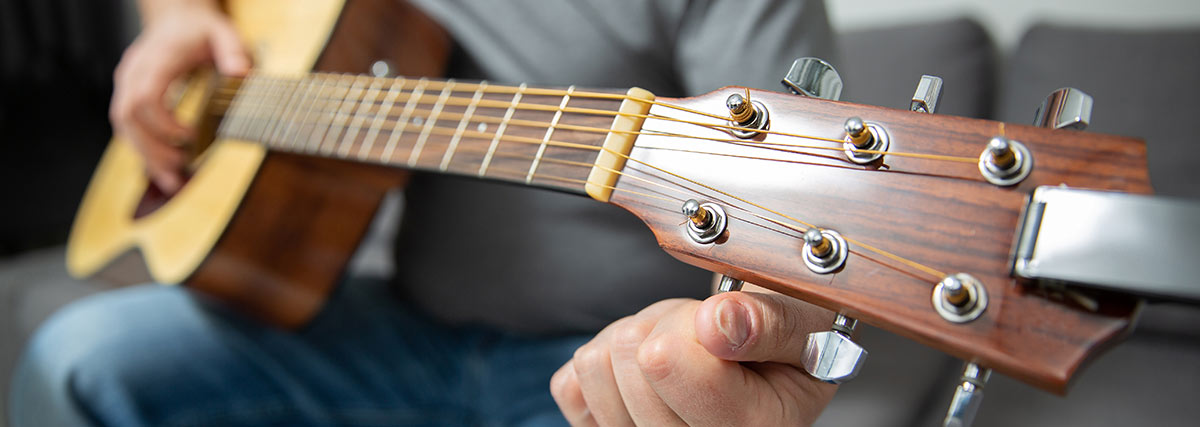
Humidity Affects the Wood, Not Just the Strings
Humidity has a slower but potentially more significant effect.
Most guitars contain wood that naturally absorbs and releases moisture from the surrounding air.
As humidity rises, wood can absorb moisture and expand slightly.
When the air becomes dry, it can lose moisture and contract.
On an acoustic guitar, these changes may affect the soundboard, neck, bridge and other structural components.
The guitar may therefore develop changes in:
- action height
- neck relief
- intonation
- tuning stability
- fret feel
- overall tone and resonance
The effect is rarely as immediate as a temperature change, but prolonged exposure to unsuitable humidity can gradually alter the way the guitar feels and plays.
Acoustic Guitars Are Particularly Sensitive
Acoustic guitars tend to respond more noticeably to environmental conditions because much of their sound depends on relatively thin pieces of wood being able to vibrate freely.
The soundboard is especially important.
If an acoustic guitar becomes excessively dry, the top may contract.
In more serious cases, the action can become unusually low, fret ends may begin to feel sharper and wooden components can potentially develop cracks.
Excess moisture creates a different set of problems.
The soundboard may swell, the action can become higher and the guitar may begin to feel less comfortable to play.
These changes can also influence intonation.
Even if the open strings are perfectly tuned, fretted notes may no longer sound quite as accurate as expected.
Good tuning therefore depends partly on the physical stability of the entire instrument.

Electric Guitars Can Change Too
Electric guitars are usually less vulnerable than acoustic instruments because their solid bodies are considerably more substantial.
However, the neck is still made from wood on most instruments, and changes in humidity or temperature can alter its relief.
Even a very small change in neck curvature can affect string height and intonation.
A guitarist may notice that the instrument suddenly feels different, begins buzzing in places where it did not before or seems more difficult to tune accurately across the fretboard.
Floating tremolo systems can make environmental changes even more noticeable because the balance between string tension and spring tension is particularly sensitive.
If the guitar repeatedly drifts out of tune despite healthy strings and careful tuning, the problem may therefore lie somewhere beyond the tuning machines.
Give Your Guitar Time to Acclimatise
One of the easiest habits for Dubai guitarists to develop is patience.
If your guitar has just travelled through intense heat, avoid opening the case and immediately expecting the instrument to behave exactly as it did at home.
Allow it to acclimatise gradually.
Keeping the guitar inside its case for a short period after arriving can help reduce an abrupt temperature change.
Once it is removed, give it some additional time in the room before making precise tuning adjustments.
This becomes particularly useful before lessons, rehearsals, recording sessions or performances.
A stable guitar is much easier to tune accurately than an instrument that is still physically adjusting to its surroundings.

Where You Store the Guitar Matters
Storage conditions have a major influence on tuning stability and long-term instrument health.
Avoid leaving a guitar beside a window where it receives direct sunlight, immediately beneath a strong air-conditioning vent or in a car.
A parked vehicle in Dubai can become extremely hot, making it an unsuitable environment for a musical instrument even for relatively short periods.
At home, consistency is preferable.
A hard case or good-quality padded case can provide some protection against rapid environmental changes.
Acoustic guitar owners may also consider monitoring humidity with a small hygrometer and using an appropriate guitar humidification system when necessary.
Humidity products should be used according to their instructions rather than added automatically.
Too much moisture can be just as undesirable as too little.
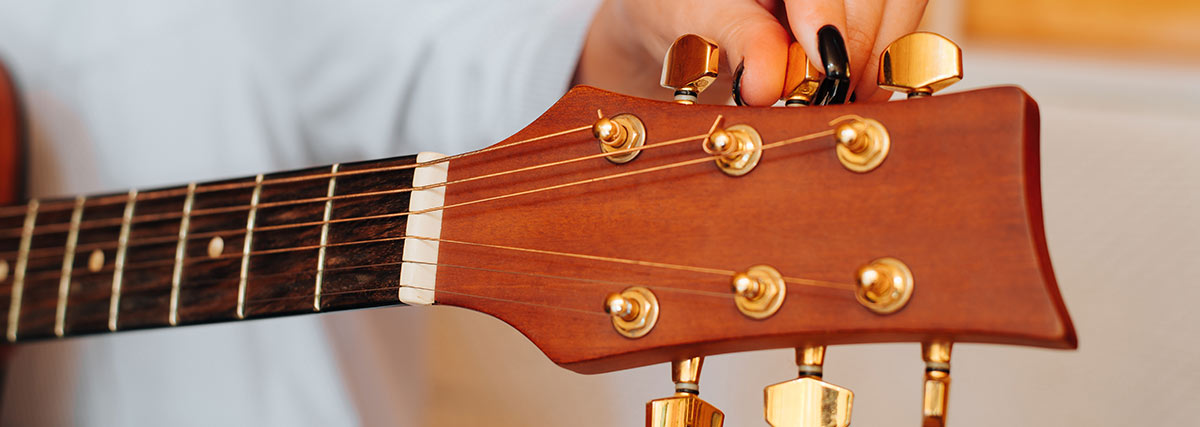
Not Every Tuning Problem Is Caused by Dubai’s Climate
It is easy to blame the weather whenever a guitar refuses to stay in tune, but several mechanical issues can produce very similar symptoms.
Old strings often lose their ability to hold pitch reliably.
Newly fitted strings may stretch considerably until they settle.
Other possible causes include poorly wound strings around the tuning posts, a nut slot that grips the string, worn tuning machines, bridge movement or inaccurate intonation.
Playing technique matters too.
Pressing a string excessively hard can pull a fretted note sharp, particularly on guitars with taller frets.
If the same tuning problem continues regardless of the environment, it is worth having the instrument checked rather than continually correcting it with the tuning pegs.

A Stable Instrument Makes Practice More Rewarding
Tuning is one of the first things guitarists learn, but good tuning becomes more sophisticated as your ear develops.
You begin to notice when individual chords sound unsettled, when an interval is slightly sharp or when an instrument that is technically tuned still does not sound quite right across the neck.
Dubai’s climate does not make reliable guitar tuning impossible.
It simply makes sensible instrument care more important.
Keep your guitar in reasonably stable surroundings, avoid unnecessary exposure to extreme heat, allow it to acclimatise after travelling and pay attention to changes in the way it feels as well as how it sounds.
At S&C Guitar in Dubai, our one-to-one guitar lessons help adult learners develop practical skills such as tuning, technique, listening and instrument awareness alongside their musical development.

RELATED POSTS