
July 15, 2026
About the Author: Stefan Joubert

Many guitarists spend years learning chords, scales and songs, yet overlook one of the instrument’s most valuable concepts. The octave system for guitarists provides a clear and practical way to navigate the fretboard, recognise note relationships and develop greater musical freedom.
Unlike many instruments, the guitar allows the same note to be played in several different positions.
This unique layout can initially seem confusing, but as octave patterns become familiar, the fretboard begins to feel far more logical.
Whether you play classical, acoustic or electric guitar, mastering the octave system can strengthen every aspect of your playing.

What Is an Octave and Why Is It One of the Most Important Concepts in Music?
An octave is the distance between one note and the next note with the same name.
For example, if you play an A note and then the next higher A, you have played an octave.
Although the pitch changes, both notes share the same musical identity, with the higher note vibrating at exactly twice the frequency of the lower one.
This relationship exists in every style of music and on every instrument.
Our ears naturally perceive octaves as familiar and balanced, which is why they appear so frequently in melodies, harmonies and accompaniment.
For guitarists, octaves are particularly valuable because they reveal how the fretboard is organised.
Instead of seeing dozens of unrelated notes, you begin to recognise repeating patterns that connect the entire neck.
Once this concept becomes clear, learning new music becomes less about memorisation and more about understanding the instrument’s structure.
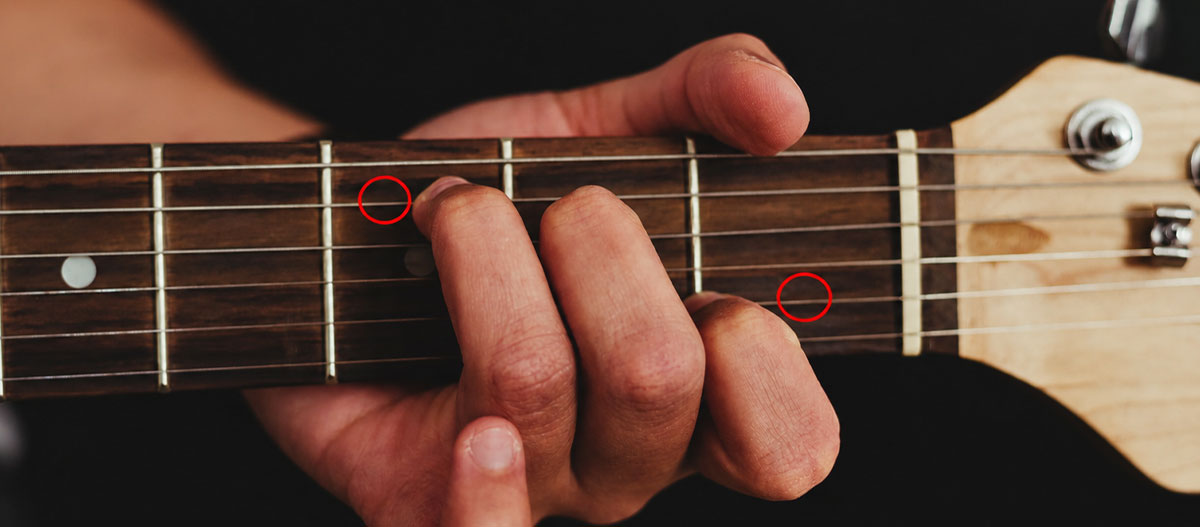
Learning the Most Common Octave Shapes Across the Fretboard
Fortunately, octave shapes on the guitar follow reliable patterns.
Once you have learnt a few of these shapes, locating the same note elsewhere on the instrument becomes much easier.
For example, a note played on the sixth string can usually be found one octave higher by moving two strings down and two frets across.
Similar relationships exist between the fifth and third strings, and between the fourth and second strings.
There is one important exception involving the second and third strings.
Because these two strings are tuned differently from the others, the octave shape shifts by one additional fret.
Although this adjustment may seem confusing initially, it quickly becomes second nature with regular practice.
Understanding these patterns allows you to move smoothly around the fretboard without constantly searching for notes.

Using Octaves to Learn Every Note on the Guitar More Efficiently
Many students attempt to memorise every note individually, which can feel like an enormous task.
While learning note names is essential, using the octave system makes the process far more efficient.
Start by memorising the notes on the sixth and fifth strings.
From there, use octave patterns to locate the same notes across the remaining strings.
Suddenly, every note you learn unlocks several more locations automatically.
This approach not only speeds up fretboard memorisation but also strengthens your understanding of musical relationships.
Over time, you begin recognising notes instinctively rather than calculating their positions.
Many experienced guitarists reach a point where they no longer think consciously about octave shapes because the entire fretboard has become visually connected.

How Professional Guitarists Use Octaves to Create Stronger Musical Ideas
The octave system is not simply an educational exercise.
Professional guitarists use octaves in countless musical situations, often without the audience even realising it.
Jazz musicians frequently play melodies in octaves to create a warm, singing sound that stands out beautifully over accompaniment.
Wes Montgomery, for example, became particularly well known for his expressive octave-based melodies.
Rock guitarists such as Slash and John Frusciante have also used octave riffs and melodic lines to create powerful, distinctive parts.
Rock and blues guitarists often build memorable riffs using octaves, producing a sound that is powerful yet clean.
Funk guitarists use octave patterns to create rhythmic grooves, while classical players rely on octave awareness when choosing the most musical fingering for a passage.
Understanding octaves also allows guitarists to transpose ideas into different areas of the neck while maintaining a comfortable playing position.
This flexibility becomes especially useful when accompanying singers or performing alongside other musicians.

Practical Exercises That Will Strengthen Your Octave Recognition
Like any technical skill, octave recognition develops through consistent practice.
Fortunately, even a few minutes of focused work during each practice session can make a noticeable difference.
Choose a single note, such as C, and locate every C on the fretboard using octave shapes.
Repeat the exercise with different notes until the patterns become familiar.
Next, play a simple melody before immediately repeating it one octave higher in another position.
Another effective exercise is to play scales while identifying the octave relationships between different strings.
This not only reinforces your fretboard knowledge but also improves your ear, helping you hear octave relationships naturally.
As these exercises become part of your routine, navigating the guitar will begin to feel increasingly intuitive.

Common Mistakes That Can Slow Down Your Understanding of the Octave System
One of the most common mistakes is relying entirely on visual patterns without learning the names of the notes themselves.
While recognising shapes is extremely useful, combining them with note knowledge creates a much deeper understanding of the instrument.
Another mistake is forgetting the adjustment required between the second and third strings.
This small difference is responsible for many positioning errors among beginners, so it deserves careful attention.
Some players also rush through octave exercises in the hope of learning the fretboard quickly.
In reality, slow and deliberate practice builds stronger long-term memory.
Taking time to understand why the patterns work is far more valuable than simply memorising them mechanically.

Why Mastering the Octave System Will Transform Your Guitar Playing
The octave system is one of the most practical concepts any guitarist can learn.
It simplifies the fretboard, improves note recognition and helps you understand how music is organised across the instrument.
As your familiarity with octaves grows, learning scales, chords, melodies and improvisation becomes far less intimidating.
You begin to think like a musician rather than simply following finger patterns, making your playing more confident, expressive and versatile.
Whether your goal is to perform classical repertoire, accompany songs on the acoustic guitar, play expressive electric guitar solos or simply feel more at home on the instrument, mastering the octave system provides a foundation that will continue to support your musical development for years to come.
Ready to develop your guitar skills and master the fretboard with expert guidance?
Book adult guitar lessons at S&C Music and start your musical journey with personalised instruction from experienced guitar teachers.

RELATED POSTS