

March 19, 2026
About the Author: S&C Music

If you are an adult guitar learner, you may naturally wonder the techniques for avoiding guitar-related pain to play more comfortably.
For many adults today, the guitar quickly becomes far more than a hobby.
It often becomes a creative outlet, a daily ritual, and a meaningful escape from the pressures of modern life.
It becomes a daily ritual, a creative outlet, and often a much-needed escape from the demands of work and life in a fast-paced city like Dubai.
However, with increased practice and enthusiasm can come an often overlooked challenge: physical discomfort.
Guitar-related pain is surprisingly common, particularly among adults who may be returning to music after years away, or beginning for the first time without guidance on posture and technique.
The good news is that most of these issues are entirely preventable with the right approach.
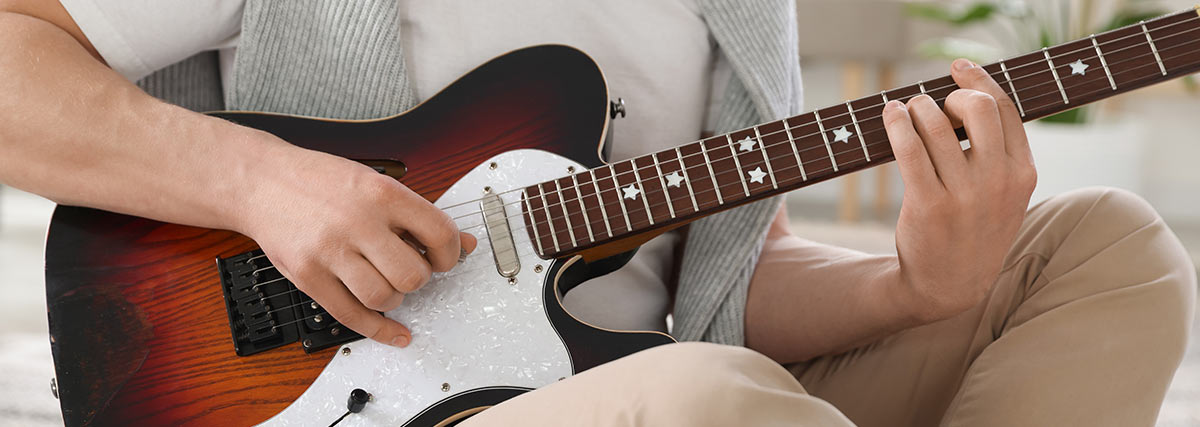
Why Does Guitar Pain Happen?
Unlike more physically demanding activities, guitar playing appears effortless from the outside.
Yet, it involves sustained, repetitive movements and fine motor control.
When combined with tension, poor posture, or over-practice, this can lead to discomfort in areas such as:
- The wrists and fingers
- The shoulders and neck
- The lower back
In Dubai’s climate, there is also an added factor.
Air-conditioned environments can cause muscles to stiffen, especially when moving between outdoor heat and indoor cooling.
This makes it even more important to approach practice with awareness and care.

The Foundation: Posture
Posture is the single most important factor in preventing guitar-related pain.
Whether you are playing seated or standing, your body should feel balanced and relaxed.
When seated, both feet should be flat on the floor, with the guitar resting comfortably against your body.
Avoid leaning forward excessively or hunching over the instrument.
The neck of the guitar should be angled slightly upwards, allowing your fretting hand to move freely without strain.
A common mistake among adult learners is trying to “reach” the instrument rather than bringing it into a natural playing position.
Over time, this creates unnecessary tension in the shoulders and back.

Tension: The Silent Enemy
Many guitarists, particularly those eager to progress, play with far more tension than they realise.
This often shows up as:
- Pressing the strings too hard
- Clenching the picking hand
- Lifting the shoulders unconsciously
In reality, effective guitar playing requires surprisingly little force.
Developing a light touch not only prevents injury but also improves tone and control.
A useful approach is to regularly pause during practice and ask yourself: Am I using more effort than necessary?
If the answer is yes, consciously release that tension before continuing.

Warm-Up and Preparation
Just as an athlete would not begin training without warming up, a guitarist should not begin practising without preparing the hands and body.
Simple movements such as gently opening and closing the hands, rotating the wrists, and playing slow, controlled scales can make a significant difference.
This helps increase blood flow, improves flexibility, and reduces the risk of strain.
Even five minutes of mindful preparation can transform the quality of your practice session.

Practice Duration and Breaks
Consistency is far more valuable than intensity.
Long, uninterrupted practice sessions often do more harm than good, especially for adult learners balancing busy schedules.
Instead of pushing through discomfort, it is far more effective to structure practice into shorter, focused sessions.
Taking regular breaks allows the muscles to recover and helps maintain concentration.
If you begin to feel pain, it is essential to stop.
Pain is not a sign of progress; it is a signal that something needs to be adjusted.

The Role of Technique
Poor technique is one of the leading causes of discomfort.
This includes inefficient finger placement, awkward wrist angles, and unnecessary movement.
Working with an experienced teacher can make a profound difference.
At S&C Guitar in Dubai, we place strong emphasis on developing technique that is both efficient and sustainable.
This ensures that students not only progress musically, but do so in a way that supports long-term physical comfort.

Creating a Comfortable Environment
Your surroundings also play a role.
In Dubai, where temperatures can vary dramatically between indoor and outdoor spaces, it is important to ensure that your practice environment is comfortable.
Avoid practising in overly cold rooms, and consider gentle stretching if your muscles feel tight.
Staying hydrated is equally important, as dehydration can contribute to muscle stiffness.

A Long-Term Perspective
Learning the guitar is a journey that unfolds over years, not weeks.
Protecting your physical well-being is essential if you wish to enjoy that journey fully.
By focusing on posture, reducing tension, practising mindfully, and seeking proper guidance, you can avoid the common pitfalls that lead to discomfort.
More importantly, you create the conditions for steady, enjoyable progress.
At S&C Guitar, we believe that great playing should feel natural and sustainable.
With the right approach, your practice sessions can remain not only productive, but genuinely pleasurable—free from pain and full of possibility.

RELATED POSTS